

Virat Kohli and the 2027 ODI World Cup: What Could His Next Chapter Look Like?
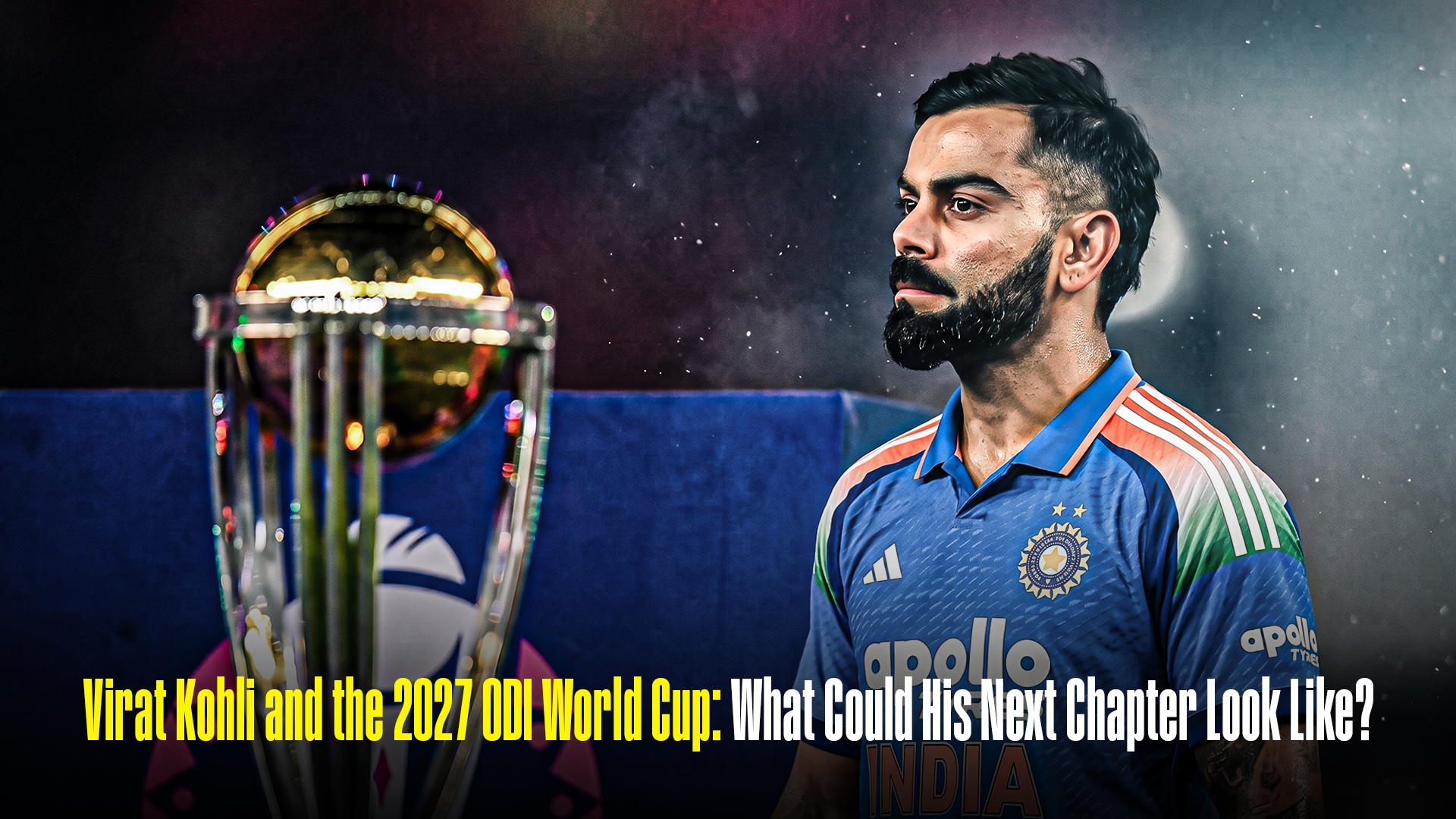
Virat Kohli’s relationship with ODI cricket is entering another significant chapter. After stepping away from Test cricket and T20Is, the former India captain has continued to focus on the 50-over format. Now, with the 2027 ICC Men’s Cricket World Cup approaching, Kohli has confirmed that the tournament will be his final World Cup for India.
That announcement gives his next phase a very different context. Rather than simply being another international tournament, the 2027 World Cup represents an opportunity to close one of the longest and most productive World Cup careers in modern cricket.
Kohli has already played four ODI World Cups, won the tournament with India in 2011 and produced an outstanding individual campaign in 2023. At the 2027 tournament, he will be looking to contribute once again in a competition where his record has been particularly strong.
Virat Kohli’s 2027 World Cup Plan
Kohli has been clear about his motivation for continuing in ODI cricket.
In September 2026, he confirmed that the 2027 World Cup in South Africa, Zimbabwe and Namibia will be his last World Cup for India. He also stated that winning the tournament is his major motivation.
This is significant because his international schedule is now more concentrated around ODI cricket. Having retired from T20Is in 2024 and Test cricket in 2025, the 50-over format remains his international focus outside franchise cricket.
Kohli had already stated earlier in 2026 that he wanted to continue playing and preparing for the 2027 World Cup. His recent comments have made that objective even clearer.
Kohli’s ODI Career and World Cup Record
Kohli’s ODI numbers provide important context for understanding his potential role in 2027.
In September 2026, he became the fastest batter to reach 15,000 ODI runs, achieving the landmark in 315 innings. He became only the second men’s ODI batter after Sachin Tendulkar to reach the mark.
His World Cup record is equally notable.
Kohli has played 37 World Cup matches, scoring 1,795 runs at an average of 59.83, with five centuries and 12 half-centuries. At the 2023 World Cup, he scored 765 runs and finished as the tournament’s leading run-scorer.
These statistics help explain why the 2027 tournament could be such an important final chapter.
How Kohli’s Batting Approach Has Changed
One of the more interesting aspects of Kohli’s current ODI phase is the evolution of his scoring approach.
Kohli has spoken about playing more freely and being willing to accelerate after establishing himself at the crease. According to the ICC, his ODI strike rate had increased from 93.54 at the end of 2024 to 99.80 by September 2026.
This could be important for India’s approach in the next World Cup.
Modern ODI cricket increasingly rewards teams that can build strong platforms while still producing high scoring rates during the middle and final stages of an innings. Kohli’s traditional strengths—chasing, strike rotation, running between wickets and batting through difficult periods—can therefore be combined with a more aggressive approach.
The key point is not simply scoring quickly from the beginning. Kohli has described his approach as being more willing to accelerate once he is established at the crease.
What Could Kohli’s Role Be in the 2027 World Cup?
Kohli’s exact role will depend on India’s team combination, conditions and form leading into the tournament.
However, several possible responsibilities are already evident.
1. Experienced Top-Order Batter
Kohli’s experience gives India a player who has already experienced multiple World Cups and high-pressure knockout matches.
He has played four World Cups and was part of India’s 2011 championship-winning squad. His experience could therefore be valuable during important tournament matches.
2. Chasing Specialist
Kohli’s reputation as a highly effective ODI chaser comes from his ability to assess targets, manage risk and build innings according to match situations.
That skill could remain particularly useful in tournament cricket, where teams frequently need players capable of controlling difficult run chases.
3. Middle-Innings Accelerator
His recent comments suggest another potential role: building an innings and then increasing the scoring rate.
This approach can provide a balance between stability and aggression, especially when India needs a substantial total.
4. Senior Player in a Changing Team
By 2027, India’s ODI squad could include several players from a younger generation alongside established names.
Kohli’s experience could therefore extend beyond his own batting performances. His familiarity with World Cup pressure and different international conditions can be part of India’s broader tournament preparation.
The Challenge of Playing a World Cup in Africa
The 2027 World Cup will be jointly hosted by South Africa, Zimbabwe and Namibia.
The tournament will feature 14 teams and 57 matches under a new three-stage format. Matches will be played across 12 venues, including eight in South Africa, three in Zimbabwe and one in Namibia.
That geographical spread creates an interesting challenge for every team.
Players will have to adapt to different venues, pitches, weather conditions and match environments. Kohli’s previous experience in South Africa and other overseas conditions could therefore be relevant.
For a senior batter, preparation will involve more than technical ability. Managing travel, recovery, training and workload could also become increasingly important during a long tournament.
Kohli’s Possible Final World Cup Chapter
The emotional significance of 2027 is difficult to separate from the cricket itself.
Kohli has already confirmed that this will be his final World Cup for India. He has also described winning the tournament as the central motivation behind his continued preparation.
But the final chapter does not necessarily have to be defined by one individual performance.
Kohli’s stated objective is to help India win matches and ultimately the tournament. He has spoken about wanting to make a match-winning contribution, including imagining a successful chase in a World Cup final.
That provides an interesting perspective on what could come next: rather than focusing exclusively on personal records, Kohli’s final World Cup campaign can be viewed through his contribution to India’s overall tournament performance.
What Fans Can Watch for Before 2027
The period leading up to the World Cup will provide several indicators of how Kohli’s final campaign could develop.
Fans can watch:
- His ODI availability and workload
- Batting position in India’s playing XI
- Scoring rate during the middle overs
- Performance against pace and spin
- Adaptation to overseas conditions
- Fitness and recovery
- His combination with India’s newer-generation batters
- India’s overall ODI strategy
These factors will provide a clearer picture than speculation about the tournament itself.
Why 2027 Could Be a Unique Chapter in Kohli’s Career
Kohli’s career has already included multiple defining moments: the 2011 World Cup victory, numerous ODI centuries, the 2023 World Cup run and the achievement of 15,000 ODI runs.
The 2027 World Cup will add a different dimension because it is now confirmed as his final World Cup for India.
It will also be his fifth ODI World Cup appearance.
The tournament therefore brings together three elements of his career: experience, continued ODI production and a final opportunity to compete for the game’s biggest 50-over trophy.
Whether the campaign produces another individual record, a decisive innings or simply valuable contributions across the tournament will depend on what happens on the field. What is already established is that Kohli intends to arrive in Africa with the World Cup as a major objective.
Final Thoughts
Virat Kohli’s 2027 ODI World Cup chapter will be watched closely because it combines an extraordinary World Cup record with a clearly stated final target.
His recent ODI performances and statistics show that he remains a significant part of India’s 50-over setup. His evolution toward a more aggressive scoring approach could also add another dimension to his batting.
With the 2027 World Cup taking place in South Africa, Zimbabwe and Namibia, the conditions will offer a different challenge from the previous tournament in India.
For cricket fans, the biggest storyline is straightforward: 2027 will be Kohli’s final World Cup for India, and he has publicly identified winning the tournament as his motivation.
The next chapter is therefore less about predicting exactly what Kohli will achieve and more about following how his ODI role, form and preparation develop on the road to the tournament.
FAQs
Will Virat Kohli play in the 2027 ODI World Cup?
Kohli has confirmed that he intends to play in the 2027 ICC Men’s Cricket World Cup and has stated that it will be his final World Cup for India.
Has Virat Kohli confirmed that the 2027 World Cup will be his last?
Yes. In September 2026, Kohli confirmed that the 2027 World Cup will be his last World Cup for India.
How many ODI World Cups has Virat Kohli played?
Kohli has played in four previous men’s ODI World Cups. The 2027 tournament would be his fifth World Cup appearance.
How many ODI runs has Virat Kohli scored?
Kohli reached 15,000 ODI runs in September 2026, becoming only the second men’s ODI batter to reach the milestone after Sachin Tendulkar.
What is Virat Kohli’s World Cup record?
Kohli has scored 1,795 runs in 37 World Cup matches at an average of 59.83, including five centuries and 12 half-centuries.
Where will the 2027 ODI World Cup be played?
The 2027 ICC Men’s Cricket World Cup will be hosted by South Africa, Zimbabwe and Namibia across 12 venues.
How has Kohli’s ODI batting approach changed?
Kohli has recently discussed playing more freely and accelerating after becoming established at the crease. The ICC reported that his ODI strike rate had reached 99.80 by September 2026.
Why is the 2027 World Cup important for Kohli?
It is important because Kohli has confirmed that it will be his final World Cup for India and has identified winning the tournament as a major motivation.
-

Cricket Series to Watch Out for in September 2024
• 30 Aug, 24 • by Flash ExchangeSeptember is shaping up to be a cricket lover's dream with an array of exciting international series taking place across the globe. From the high-octane action
-
India’s Schedule Leading Up to Champions Trophy
• 09 Aug, 24 • by Flash ExchangeFresh from their T20 World Cup triumph, the Indian cricket team is set for a relentless schedule as they build up to the 2025 Champions Trophy. With a mix of Test matches and limited-overs
-
Shikhar Dhawan Calls Time on His Cricket Career
• 26 Aug, 24 • by Flash ExchangeIndian cricket star Shikhar Dhawan announced his retirement from both international and domestic cricket, ending a career marked by consistent performances