

How to Read a Cricket Pitch: A Batter’s and Bowler’s Guide
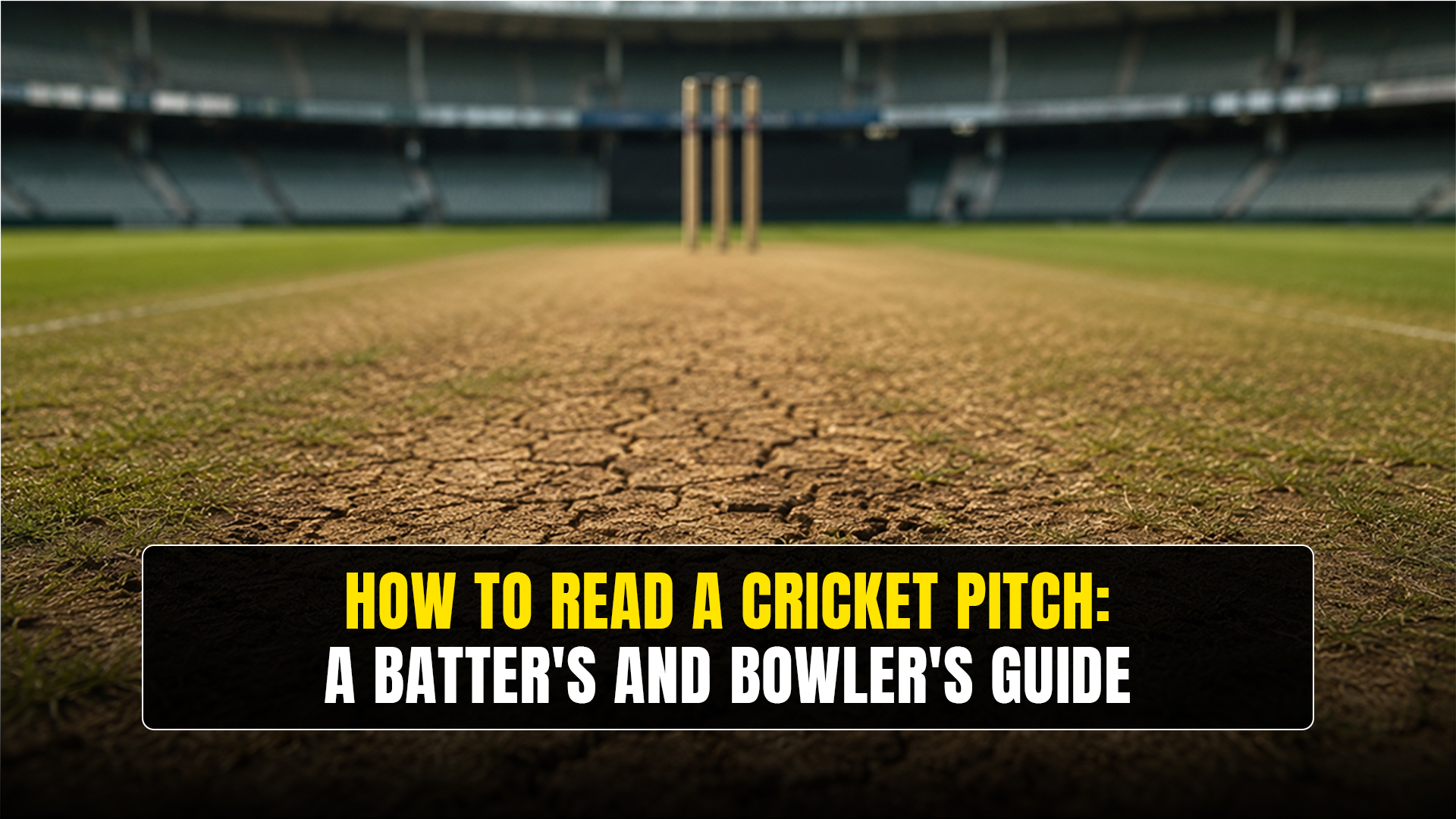
Before a single ball is bowled, the most important contest in cricket has already begun. Two captains crouch over a 22-yard strip of soil, prodding it, studying its colour, feeling its hardness, trying to see the future written in the dirt. Getting that reading right can win a match before it starts. Getting it wrong can lose one just as quickly.
The pitch is cricket’s silent thirteenth player, and learning to read it separates the good from the great. This is a complete guide to how to read a cricket pitch, for batters and bowlers alike.
Why Reading the Pitch Matters So Much
Unlike most sports, cricket is played on a surface that changes from ground to ground, and even from hour to hour.
A pitch dictates how fast the ball arrives, how much it deviates off the seam or spins off the surface, and how high or low it bounces. That single strip determines whether a captain should bat or bowl first, which bowlers to pick, and how a batter should build an innings. Two teams playing the same match on the same day can experience completely different games depending on how each side reads the conditions.
In short, the pitch is the foundation of every tactical decision in cricket.
The Main Types of Cricket Pitches
While every surface is unique, most pitches fall into a few recognisable categories. Learning to spot them at a glance is the first step to reading conditions correctly.### The Green Pitch
A green pitch has a visible covering of grass, and it is a fast bowler’s best friend. The grass holds moisture and helps the ball seam and swing, offering lateral movement that can make batting treacherous early on. On a green top, bowling first is often tempting, as the surface tends to ease out once the moisture burns off under the sun.
The Dry and Dusty Pitch
A dry, brownish pitch with little grass is a spinner’s paradise, common on the subcontinent. As the match wears on, the surface crumbles, producing rough patches and cracks that grip the ball and generate sharp turn. Batting is usually easiest early, before the pitch deteriorates, making the toss and batting first a major advantage.
The Flat Track
A flat track, often called a “belter” or “road,” is hard, even and offers little help to bowlers. The bounce is true and predictable, and batters can trust the ball to come onto the bat, leading to high scores. On these surfaces, patience and discipline are a bowler’s only real weapons.
Clues Every Player Should Look For
Reading a pitch is a detective’s job. The surface leaves clues, and knowing what to look for turns guesswork into insight—not just for players and captains, but also for traders on any modern sport betting exchange, where live pitch assessments and evolving playing conditions heavily dictate session markets and in-play odds.
Colour, Grass and Moisture
Start with the obvious. A green tinge signals seam and swing; a bare, brown surface points to spin. Press a finger or key into the pitch: if it leaves a mark, the surface is soft and may offer early movement or slow, low bounce. A hard, unyielding pitch usually means pace, bounce and good batting conditions. Early-morning moisture or dew can also dramatically change how a pitch behaves.
Look closely at the surface texture. Cracks are crucial: while they may sit harmlessly closed early on, they widen as the match progresses, and a ball landing on one can misbehave alarmingly. Bowlers’ footmarks outside the crease create rough patches that spinners target ruthlessly later, which is why the same pitch can play beautifully on day one and treacherously on day four.
The Toss Decision: Putting Your Reading to Work
All that analysis leads to one pivotal moment: the toss. This is where reading the pitch becomes a live tactical weapon.
A captain must project not just how the pitch plays now, but how it will evolve over the match. On a green seamer under cloud cover, bowling first to exploit the movement is often wise. On a dry turner, batting first to post runs before the surface crumbles is usually the smart call. Weather adds another layer, since overhead conditions influence swing, and rain can transform a docile surface in minutes. Reading these signals correctly is what separates a captain who gambles from one who makes an informed, calculated call.
Rain, of course, does more than alter the pitch. It can shorten the match itself and force revised targets, which is where an understanding of the cricket DLS method targets becomes just as valuable as reading the surface. A captain who correctly judges both the pitch and the weather holds a genuine edge before a ball is bowled.
Adapting Your Game to the Surface
Reading the pitch is only half the battle; the best players adjust to what it tells them. On a seaming green top, a batter must leave deliveries outside off stump and survive the opening spell before cashing in, while a bowler pitches the new ball up to swing it. On a turner, batters use their feet and soft hands, and bowlers aim fuller into the rough. The player who adapts fastest almost always comes out on top.
Conclusion
Learning how to read a cricket pitch is one of the most valuable skills in the game, and one of the most overlooked by casual fans. From spotting a green seamer or a dusty turner to decoding cracks, moisture and wear, the surface constantly whispers its secrets to those who know how to listen. Combine that reading with an awareness of the weather and the match situation, and you transform from a passive participant into a genuine tactician. The next time two captains inspect the strip before play, you will know the game’s first and most important battle is already underway, fought not with bat or ball, but with knowledge of the pitch beneath their feet.
Frequently Asked Questions (FAQs)
- What is the easiest way to read a cricket pitch? Start with colour and hardness. A green, grassy surface favours seam and swing bowling, while a dry, brown, cracked surface favours spin. A hard pitch offers pace and bounce; a soft one can mean slow, low or uneven behaviour.
- Why do captains inspect the pitch before the toss? They are judging how the surface will play and how it will change over the match, which informs whether to bat or bowl first and which bowlers to select.
- What does a green pitch mean for batting and bowling? A green pitch helps fast bowlers with seam and swing, making early batting difficult. It often eases later once the moisture dries, so captains frequently bowl first.
- Why do cracks in a pitch matter? Cracks widen as a match progresses, and a ball landing on one can bounce or deviate unpredictably, so pitches that bat well early can become far tougher later.|
- How does weather affect a cricket pitch? Overcast, humid conditions assist swing bowling, while sunshine dries and hardens the surface. Rain can also shorten a match and trigger revised targets.
- Should you always bat first if you win the toss? No. On a dry, deteriorating pitch, batting first is usually wise, but on a green surface under cloud cover, bowling first can be smarter.
-

Virat Kohli’s T20 World Cup Farewell: A Look Back at His Greatest Hits
• 19 Jul, 24 • by Flash ExchangeVirat Kohli, a legend of the game, recently retired from T20 Internationals, but not without leaving his mark on the biggest stage the T20 World Cup. He finished his T20I career
-

Women’s Premier League 2023: A Turning Point?
• 08 Dec, 23 • by Flash ExchangeThe Indian women's cricket team, not too long ago, had limited exposure to packed stadiums and a large fan base. The glitz, glamour, and financial stability of the IPL seemed like a distant dream.
-

Jasprit Bumrah Reclaims No. 1 Spot in ICC Test Bowling Rankings
• 04 Oct, 24 • by Flash ExchangeJasprit Bumrah has once again made history, reclaiming the prestigious title of the No. 1 Test bowler in the world. The star Indian pacer achieved this feat after his impressive performance