

Pink Ball, Night Skies: Inside the Rise of Day-Night Test Cricket
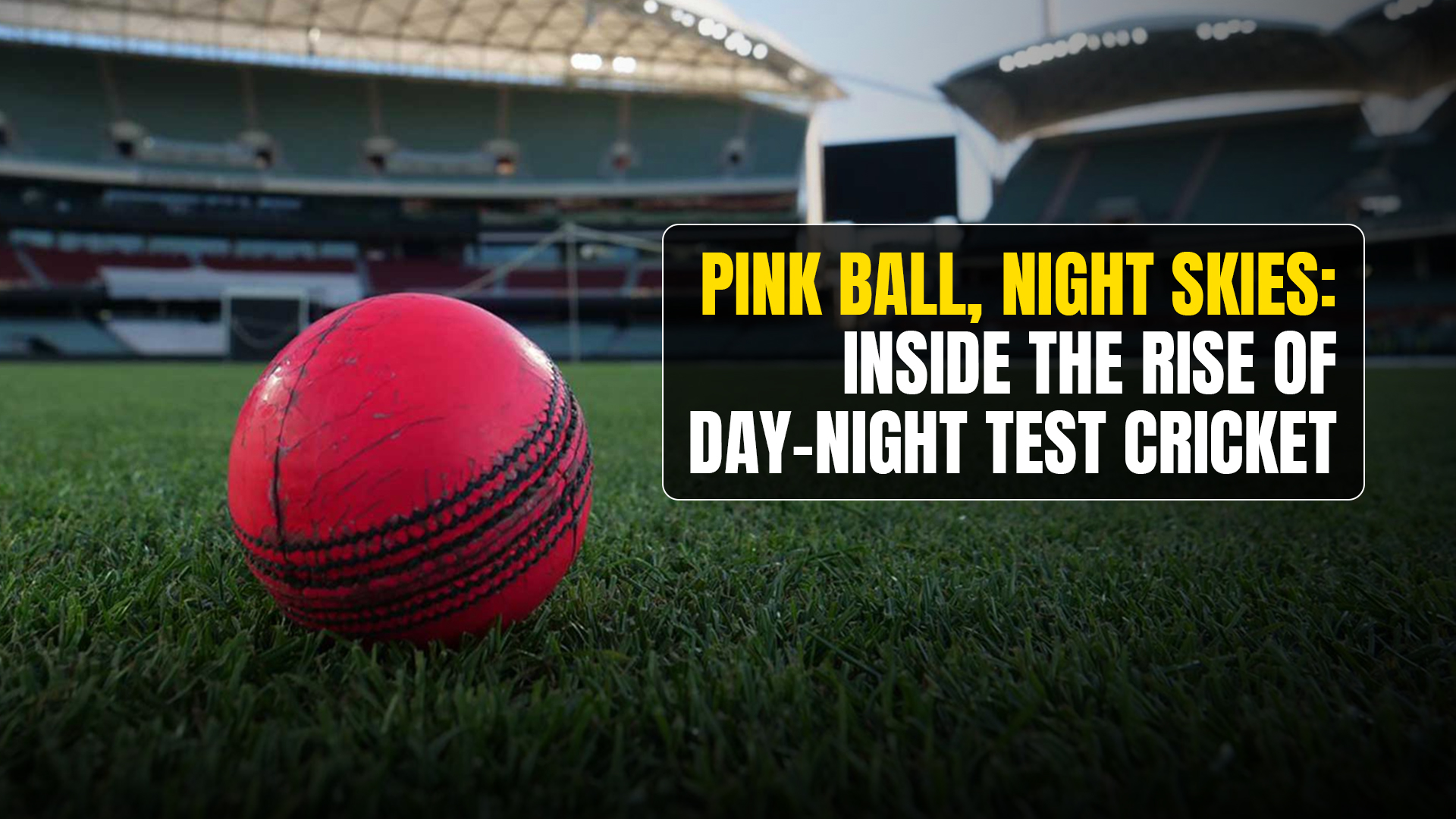
For 138 years, Test cricket lived by the sun. Play began in the morning, ended in the late afternoon, and the traditional red ball glinted under natural light exactly as it always had. Then, on a warm November evening in Adelaide in 2015, the floodlights blazed, a pink ball gleamed against a darkening sky, and the oldest format in the game stepped boldly into the night. Day-night Test cricket was born, and with it came a fascinating experiment: could cricket’s purest, slowest format be reinvented for the modern age without losing its soul? This is the story of the pink ball, the night skies, and one of Test cricket’s most dramatic innovations.
Why Test Cricket Needed to Change
To understand day-night Tests, you first have to understand the problem they were designed to solve.
By the 2010s, Test cricket faced an existential threat. While the format remained the connoisseur’s pinnacle, its grip on the general public was slipping. Matches played across five weekday afternoons drew sparse crowds, since most fans were at work or school during play, and television audiences were drifting towards the shorter T20 game.
Administrators searched for a solution, and the logic of the evening was compelling. Limited-overs cricket had long thrived under floodlights, drawing crowds after working hours and capturing prime-time television slots. If part of a Test could be shifted into the evening, the format might reconnect with the very audience it was losing. All that stood in the way was a stubborn technical problem: the ball.
The Science of the Pink Ball
The traditional red ball was the single biggest obstacle to Test cricket under lights, and solving that puzzle took years of painstaking work.
Why Red Would Not Work
Under floodlights, the red ball becomes difficult to see, fading into the background and turning dark as the evening wears on. A white ball, used in limited-overs cricket, was not an option either, since it clashes badly with the players’ traditional white clothing. Cricket needed an entirely new colour, visible in bright sun, under artificial light, and against both green grass and white kit.
Sixteen Shades of Pink
The answer was pink, but arriving at it was a saga of trial and error. Manufacturer Kookaburra spent years experimenting, first testing yellow and fluorescent orange before rejecting them because television cameras found the colours jarring and hard to track. After trialling as many as 16 different shades, pink emerged as the ideal compromise: bright enough to spot in every lighting condition, and clear on screen for broadcasters. Even the seam colour became a science, tweaked to help players and umpires judge the ball’s movement.
A New Era Dawns in Adelaide
With the ball finally ready, history was made on 27 November 2015. Australia hosted New Zealand at the Adelaide Oval in the first day-night, pink-ball Test, played before a packed crowd of over 47,000. When fast bowler Mitchell Starc steamed in to bowl the first ball to Martin Guptill, cricket crossed a threshold it could never step back over. This shift also transformed live trading across every major sport betting exchange, where the unique dynamics of the twilight session created entirely new market fluctuations for sessions, wickets, and run lines.
The Twilight Factor: A Bowler’s Paradise
If one feature defines day-night Test cricket, it is the twilight session, the passage of play as daylight fades and the floodlights take over.
This transition period has become the format’s signature drama. As the light changes, the pink ball tends to swing and seam prodigiously, and batting can become treacherous for an hour or two. Captains and coaches obsess over the twilight window, timing their innings and bowling changes around it, knowing a cluster of wickets can fall in a matter of overs.
This makes day-night Tests a unique tactical puzzle, where the time of day matters as much as the state of the game.
Triumphs, Doubts and an Australian Stronghold
A decade on, day-night Test cricket has settled into a fascinating, if uneven, place in the game.
Australia’s Pink-Ball Fortress
Australia embraced the concept like no one else, turning the Adelaide pink-ball Test into a cherished fixture of its summer and winning almost every one it has played. That dominance has produced memorable theatre, including the infamous match where India, initially reluctant to play with the pink ball, were bowled out for a record-low 36 in Adelaide. Reading these shifting conditions is a skill in itself, closely related to the wider art explored in this guide on how to read a cricket pitch, since under lights a captain must weigh not just the surface and weather, but the precise moment the sun dips below the stands.
The Lingering Doubts
Yet doubts remain. Some players and purists argue the twilight swing tilts the contest too heavily towards bowlers, distorting a fair examination of skill, while others question the pink ball’s durability compared to the red. Adoption has therefore been patchy, with several nations playing only a handful of day-night Tests. Still, the innovation has undeniably delivered bigger crowds and gripping cricket wherever it has been embraced.
Conclusion
The rise of day-night Test cricket is a story of bold reinvention. Faced with dwindling crowds and a fast-changing sporting landscape, cricket dared to take its oldest format into the night, and the gamble largely paid off. From the years of research behind the pink ball to the spine-tingling drama of the twilight session, the day-night Test has injected fresh energy and a new tactical dimension into the five-day game. It is not without its critics, and it may never fully replace the traditional red-ball contest. But under those magenta evening skies, Test cricket found a way to feel modern again, proving that even the most storied traditions can shine brightest after dark.
Frequently Asked Questions (FAQs)
- When was the first day-night Test match played? The first day-night Test took place from 27 November 2015 at the Adelaide Oval, where Australia beat New Zealand by three wickets in a low-scoring, bowler-dominated contest.
- Why is a pink ball used in day-night Tests? The traditional red ball is hard to see under floodlights, and a white ball clashes with players’ white clothing. Pink was chosen after extensive testing as the most visible colour in all lighting conditions.
- Why was pink chosen over other colours? Manufacturers first tested yellow and fluorescent orange, but television cameras found them jarring and hard to track. After trialling around 16 shades, pink emerged as the best balance of visibility and broadcast clarity.
- What is the twilight session in day-night Tests? The twilight session is the period when daylight fades and floodlights take over. The pink ball often swings and seams sharply during this window, making batting especially difficult and creating dramatic passages of play.
- Why has Australia been so successful in pink-ball Tests? Australia embraced the format earliest and most fully, hosting most day-night Tests at venues like the Adelaide Oval and building deep experience with pink-ball conditions.
- Do all countries play day-night Test cricket? No. Adoption has been uneven. While Australia has fully embraced it, many nations have played only a few, with some players and purists cautious about altering cricket’s most traditional format.
-

Bangladesh whitewash Pakistan after clinching the Test series 2-0 in Pakistan
• 04 Sep, 24 • by Flash ExchangePakistan's cricket team has suffered a humiliating defeat at the hands of Bangladesh, losing the Test series 2-0 on home soil. This marks a significant low point for Pakistani cricket,
-

Get Ready for the Action! A Beginner’s Guide to the PSL 2024
• 13 Feb, 24 • by Flash ExchangeCricket fans, rejoice! The ninth edition of the Pakistan Super League (PSL) is just around the corner, kicking off on February 17th, 2024.
-

Can anyone catch India and Australia in the race to the WTC final?
• 23 Aug, 24 • by Flash ExchangeAs the cricket world gears up for the upcoming Test series, the race for the World Test Championship (WTC) final is heating up. With several teams still in contention,